The industry was promised that automated platforms would capture in-store reality. Widespread scaling never happened. Here’s why traditional robotics stalled — and how ShelfOptix™ is designed to fix what matters.

Retailers and brand manufacturers face a persistent challenge: closing the gap between what you think is happening and what is actually happening in-store. The industry was previously promised that automated platforms would be the ultimate solution to capture this in-store reality.
Yet, widespread scaling hasn’t happened. Why haven’t businesses scaled with traditional robotics?
We’ve heard the same frustrations repeatedly from customers: the computer vision is not accurate, the upfront costs are too high, and the operational burden on store teams is too heavy — with many teams cutting use altogether.
Here is a look at why traditional models stalled — and how ShelfOptix™ is designed to fix what matters.
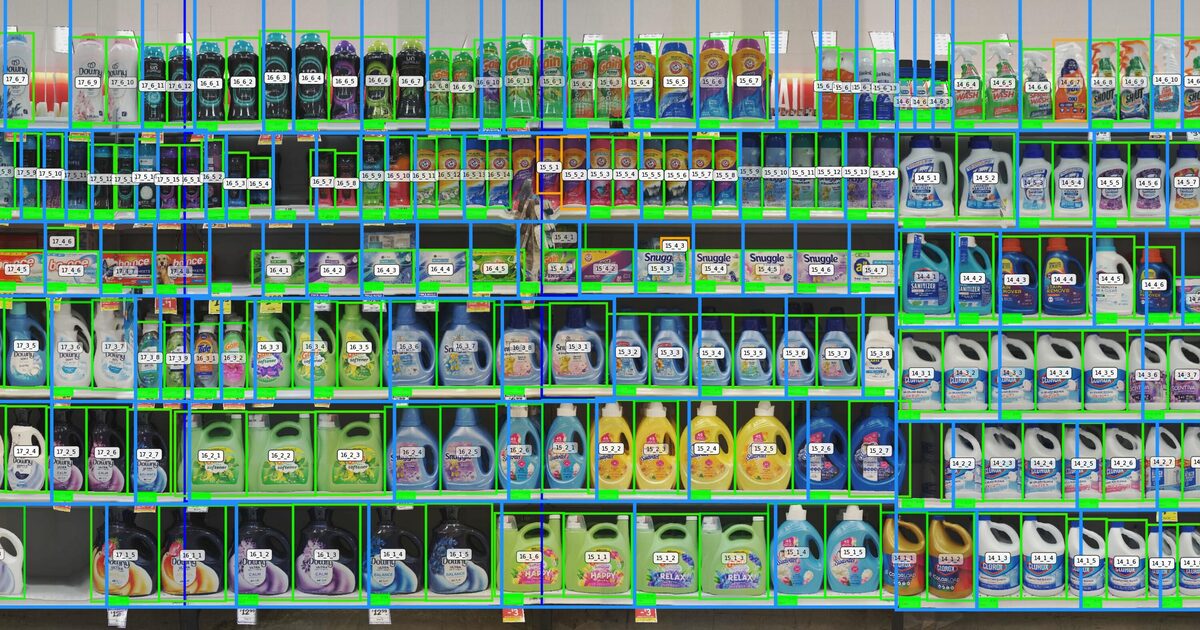
Early robotic platforms struggled to deliver reliable computer vision data because their cameras could not consistently capture clear images of the aisles or properly process the data.
When technology fails to provide Shelf Truth, it cannot effectively improve pricing accuracy or strengthen planogram compliance. If the data is unreliable, retailers cannot confidently recover lost sales, reduce margin leakage, or improve store performance.
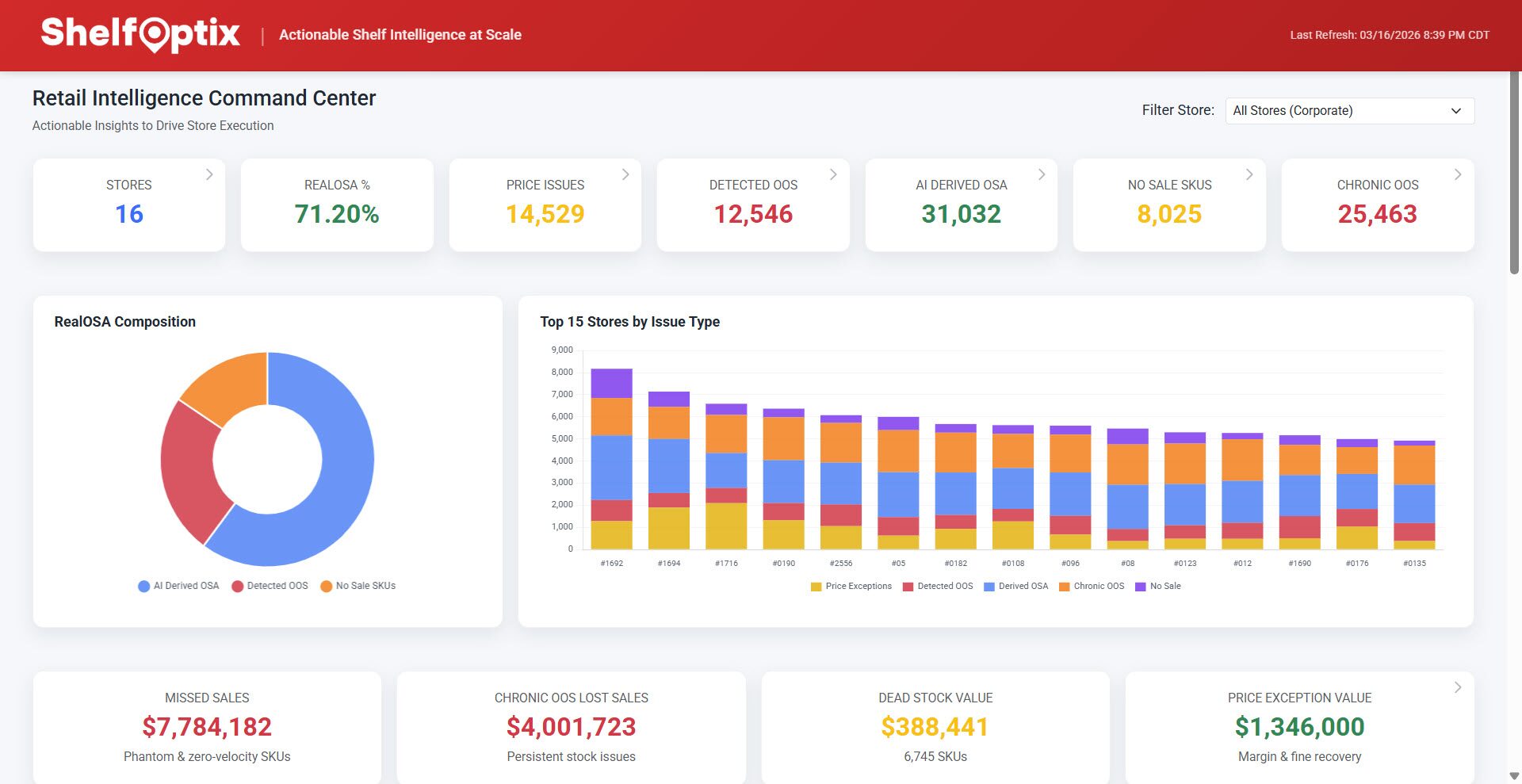
Our portable ShelfOptix units are powered by BrainOS®, which supercharges the computer vision through advanced AI-driven analytics. By pairing the BrainOS® platform with high-resolution shelf images, we capture clear shelf-level data to deliver precise, AI-enabled insights. This ensures timely and consistent visibility, empowering you to detect phantom inventory and other execution gaps with absolute confidence.
Traditional robotics required businesses to purchase or lease expensive hardware, creating massive upfront costs and long implementation timelines.
Sinking budget into depreciating hardware makes it difficult to prove ROI and restricts the capital needed to actually improve store execution.
With our fully managed service, there is no robot purchase or lease required. You buy insights, not robots. This means absolutely no CapEx and no ownership while achieving visibility at scale. Instead of a robot living in each store full-time, ShelfOptix operates a network of portable robots that rotate across multiple locations on a scheduled basis. The cost of the robot, its maintenance, insurance, and operation is spread across many clients and stores. See how one store cut price exceptions 72% in four days under this model.
Older models often required constant monitoring from store staff, creating new operational bottlenecks instead of solving old ones.
Store teams should be focused on improving the customer experience and driving sales, not rescuing stuck machines or troubleshooting hardware.
ShelfOptix relies exclusively on portable, human-escorted robots. Because the service is fully managed for you, there is no operational burden placed on your teams.
“You buy insights, not robots. No CapEx, no ownership, no burden on your store teams — visibility at scale.”
You can’t fix what you can’t see. The goal of a true Shelf Intelligence Service must be to provide actionable store-level insights that drive sales and improve execution.
Our core model is built to ensure you turn insights into action:
We deploy portable, human-escorted robots to capture shelf truth.
We identify chronic out-of-stocks, deliver pricing accuracy, and planogram compliance.
ShelfOptix finds the problems. Driveline fixes them — with a national field force available for surge capacity, resets, or execution support.
It’s how we bridge the execution gap — as the only shelf intelligence platform backed by a national field force, available when you need surge capacity, resets, or execution support.
Scan the shelf. See the signals. Fix the store.
Three failures of the traditional ownership model stalled retail robotics: computer vision that could not consistently capture reliable shelf data, high upfront hardware costs that made ROI hard to prove, and a hidden operational burden on store teams who had to monitor and rescue in-store machines. Many retailers cut usage altogether rather than absorb those costs.
A fully managed scanning service. Instead of purchasing hardware that lives in each store full-time, a managed model like ShelfOptix operates a network of portable robots that rotate across multiple locations on a scheduled basis. The cost of the robot, its maintenance, insurance, and operation is spread across many clients and stores — so retailers and brands buy insights, not robots, with no CapEx and no ownership.
ShelfOptix uses portable, human-escorted robots powered by BrainOS® rather than fixed robots that live in one store. The service is fully managed end to end — deployment, data capture, maintenance, and analytics — so store teams carry no operational burden. And because ShelfOptix is backed by Driveline Retail’s national field force, the insights connect directly to execution: ShelfOptix finds the problems, Driveline fixes them.
Under the ownership model it often did — store staff ended up monitoring machines, rescuing stuck units, and troubleshooting hardware. Under a fully managed, human-escorted model, a trained operator escorts the robot through the store, so scanning adds zero work for store associates, who stay focused on customers and sales.
Actionable store-level insights, not raw data. A true shelf intelligence service scans the shelf to capture ground truth, generates insights on chronic out-of-stocks, pricing accuracy, and planogram compliance, and then enables action — connecting each finding to a field team that can correct it at the shelf.
Scan the shelf. See the signals. Fix the store. ShelfOptix delivers ground-truth shelf visibility at retail scale — no CapEx, no ownership, no burden on your store teams — backed by a national field force ready to act on every insight.
Thanks for reaching out. A member of the ShelfOptix™ team will be in touch with you right away.