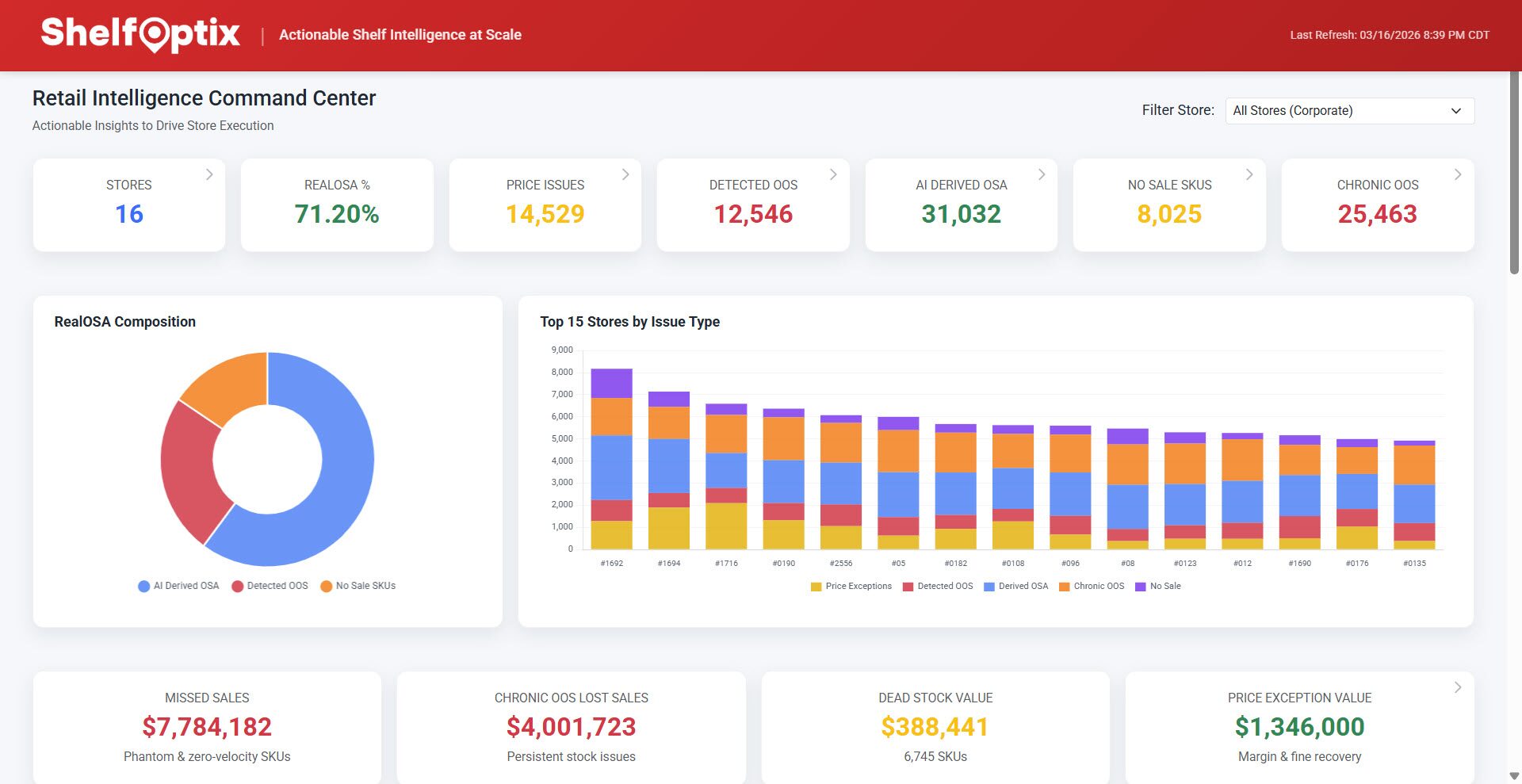
For decades, retail accepted operational friction as a cost of doing business. Inventory counts drift, stockouts hide, and talented teams chase discrepancies instead of serving customers. AI vision and automation are changing all of that — and the financial case is impossible to ignore.
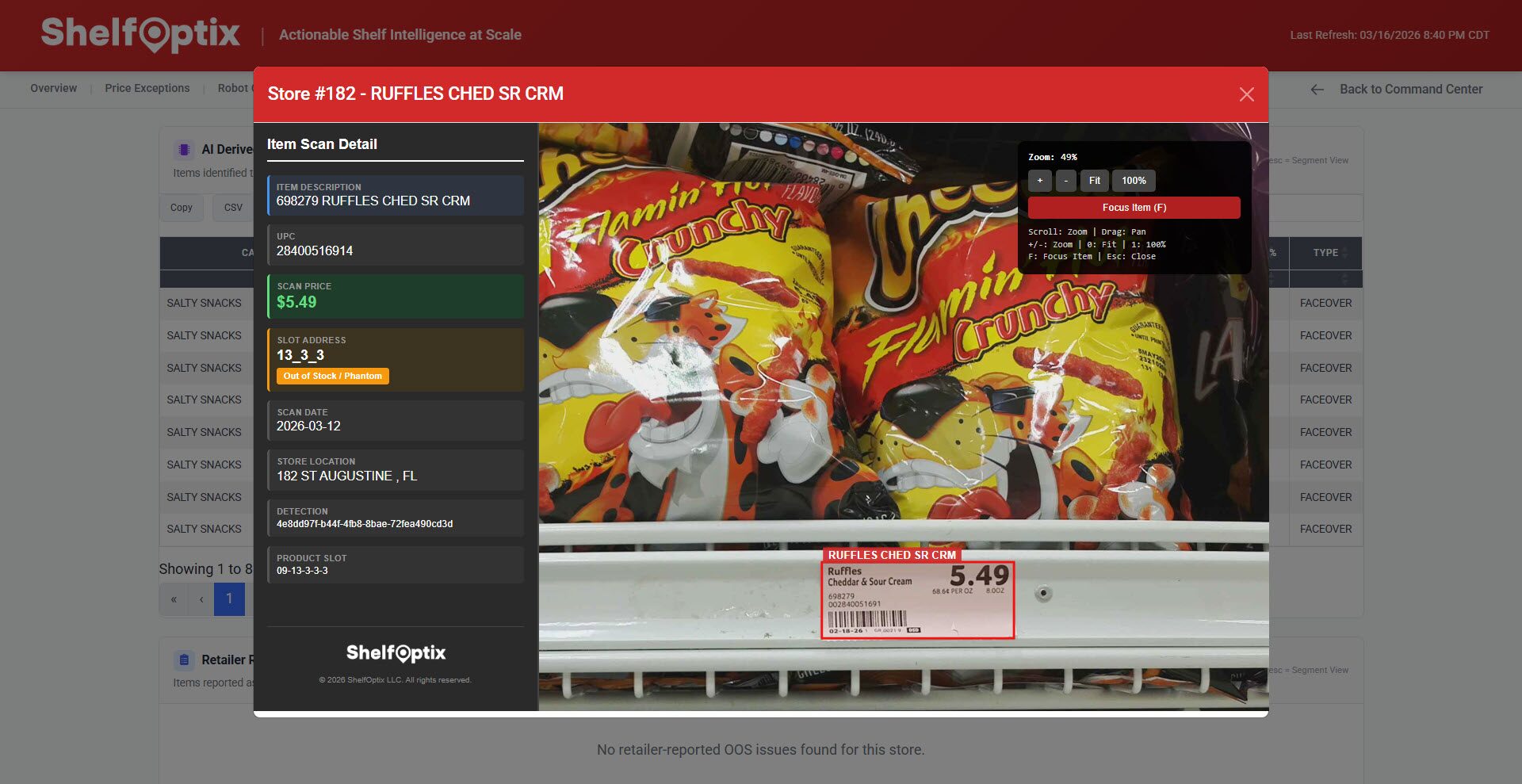
For decades, the retail industry accepted a certain level of operational friction as a standard cost of doing business. Inventory counts drift, stockouts remain hidden, and talented store teams spend hours chasing discrepancies instead of serving customers.
The financial toll of this friction is severe. According to research from IHL Services, global retail inventory distortion — the combined cost of out-of-stocks and overstocks — costs the industry a staggering $1.77 trillion annually. Of that total, $690.9 billion is lost entirely to out-of-stock scenarios alone.
AI vision and retail automation solve this problem by transforming physical stores into fully digitized, data-rich environments. At the forefront of this evolution is ShelfOptix™ — a purpose-built ecosystem designed to eliminate the guesswork from shelf monitoring and inventory management. For retail leaders, embracing AI is no longer an innovation experiment. It is a structural imperative to protect margins, maximize ROI, and unlock the full potential of their workforce.
The retail landscape demands agility, and traditional manual processes consistently fall short. Cycle counts are infrequent. Visual inspections are subjective. By the time a gap is identified and escalated, the damage — a lost sale, a frustrated shopper, a missed promotional window — has already occurred.
Automation now drives the entire store ecosystem. AI vision technology brings unprecedented precision to the retail floor, acting as a continuous source of truth that empowers associates to act decisively rather than react belatedly. For a full breakdown of how computer vision actually works on a retail shelf — the detection pipeline and the six camera placements sold under that name — see our dedicated guide. Four trends are driving this operational shift from reactive firefighting to proactive strategy:
ShelfOptix™ serves as the central intelligence hub for modern shelf monitoring. It provides the exact data retailers and brands need to maintain optimal stock levels, flawless display compliance, and a consistent shopper experience across every store and every aisle.
Modern computer vision systems integrated within ShelfOptix™ achieve inventory item recognition accuracy of 96% to 99%, drastically reducing out-of-stock situations and directly attacking the inventory distortion problem at its source. By integrating ShelfOptix™, retailers unlock a suite of critical capabilities:
“ShelfOptix™ empowers retail teams to make data-driven decisions that immediately enhance the shopper experience and tighten operational efficiency.”
Computer vision retail solutions fundamentally change how inventory is tracked. The technology relies on a sophisticated network of cameras, sensors, and autonomous robots that capture high-resolution, real-time visual data directly from store shelves. Sophisticated data processing algorithms ingest this visual data, accurately identifying product placement, measuring precise stock levels, and cross-referencing everything against the master planogram.
When an item runs low, has gone out of stock, or is misplaced, the system instantly generates an actionable alert routed directly to the right associate with the right priority. The core architecture follows a three-stage loop:
By automating the tedious task of shelf auditing, this architecture equips store associates with clear priorities, allowing them to channel their energy into customer engagement and high-value merchandising rather than manual inspections.
The deployment of autonomous inventory robots represents a significant leap in workforce empowerment. These machines scan the store floor to gather critical data, acting as a force multiplier for the human team rather than a replacement for it. Working seamlessly with ShelfOptix™ AI vision systems, robots roam the aisles to detect exact stock levels and feed continuous data back to the central platform.
The combined power of robots and AI delivers three outcomes that consistently prove transformative for store operations:
The transition to AI vision delivers measurable, quantifiable returns. Retailers integrating these solutions consistently report improvements in inventory accuracy, staff productivity, and overall profitability. Accurate inventory monitoring minimizes costly stockouts and prevents capital-draining overstock situations simultaneously.
Beyond the inventory metrics, AI solutions provide store teams with precise direction — elevating their daily work from manual auditing to strategic brand ambassadorship. Associates spend less time searching for problems and more time solving them and serving customers.
The future of retail belongs to organizations that seamlessly blend physical spaces with digital intelligence. As AI and machine learning advance, the focus shifts toward hyper-personalized customer service and highly efficient operational workflows that were previously impossible without real-time shelf data.
Retailers embracing AI vision and automation solutions like ShelfOptix™ secure a structural competitive advantage. By ensuring flawless inventory execution, driving down operational costs, and amplifying the capabilities of their teams, they set a new standard for retail excellence — one where the gap between the corporate plan and in-store reality finally closes for good.
Inventory distortion statistics sourced from IHL Services. Supply chain error reduction data sourced from McKinsey & Company retail AI research. For the full IHL Services Shelf Intelligence Report, developed in partnership with Brain Corp: Download the report →
ShelfOptix™ brings AI vision, autonomous scanning, and 15,000 Driveline associates together in one fully managed service — delivering the ground-truth shelf visibility retailers and brands need to act.
Thanks for reaching out. A member of the ShelfOptix™ team will be in touch with you right away.