Every shelf has a plan. Between that plan and what shoppers actually see in the aisle, there’s often a significant gap — one that shows up every day in lost sales, inventory challenges, and strained brand relationships.
Every shelf has a plan. That plan lives in a planogram system at headquarters — a carefully designed blueprint for what product goes where, how many facings it gets, and what price tag should sit next to it. It reflects weeks of category management decisions, promotional commitments, and retailer-brand agreements.
But between that plan and what a shopper actually encounters in the aisle, there is often a significant gap. And that gap is costing retailers and brands more than most realize.
Recent research from IHL Services makes the scale of this problem concrete. Their Shelf Intelligence Report — developed in partnership with Brain Corp — surveyed retailers of all sizes and found widespread, systemic execution failures across the industry:
Read the Full IHL Services Shelf Intelligence Report →These findings confirm what many retail operations leaders already suspect: the execution gap isn’t an edge case. It’s a structural challenge that repeats across thousands of stores, every single day.
Walk any store and you’ll see it. The gap shows up in specific, repeatable ways that are easy to miss on a fast store walk but costly over time.
These aren’t edge cases. They happen on nearly every store visit. And because they don’t trigger alarms or generate alerts in traditional systems, many go unnoticed during manual store walks — accumulating quietly into real revenue loss.
The impact of the planogram gap works its way up and down the retail value chain.
For shoppers, a shelf that doesn’t match expectations is a frustrating experience. They can’t find the product they came for, the price doesn’t match what they saw in the ad, or the item is simply not there. That’s a lost sale — and sometimes a lost customer.
For store operations teams, execution gaps create compounding inventory challenges. Phantom inventory leads to skipped replenishment cycles. Out-of-stocks that go undetected sit empty for hours or days. The team is working hard but without the shelf visibility needed to prioritize and act.
“The common thread is simple: HQ doesn’t always have a clear view of what’s happening on the shelf.”
For brand manufacturers, the stakes are just as high. Brands invest in promotions, new item launches, POG resets, and pricing strategies that depend entirely on proper in-store execution. When shelf conditions don’t match the plan — when facings are wrong, price tags are missing, or the product isn’t even in the right location — that investment doesn’t deliver its intended ROI. And over time, persistent execution failures create real friction in retailer-brand relationships.
The common thread running through all of these challenges is straightforward: headquarters doesn’t always have a clear view of what’s happening on the shelf.
Manual store audits are infrequent, incomplete, and inconsistent. Sample data from a handful of stores doesn’t represent the full network. Reported conditions are often stale by the time they reach the people who can act. And as the IHL research shows, the larger the retailer, the worse the problem gets — execution gaps and data inaccuracies compound at scale.
The result is a growing distance between the corporate planogram vision and the in-store reality — and neither side has the ground truth they need to reliably close it. Measuring that distance is a discipline of its own: see our full guide to planogram compliance — the definition, the formula, and the three ways retailers measure the shelf against the plan.
This is precisely the visibility gap ShelfOptix is designed to close.
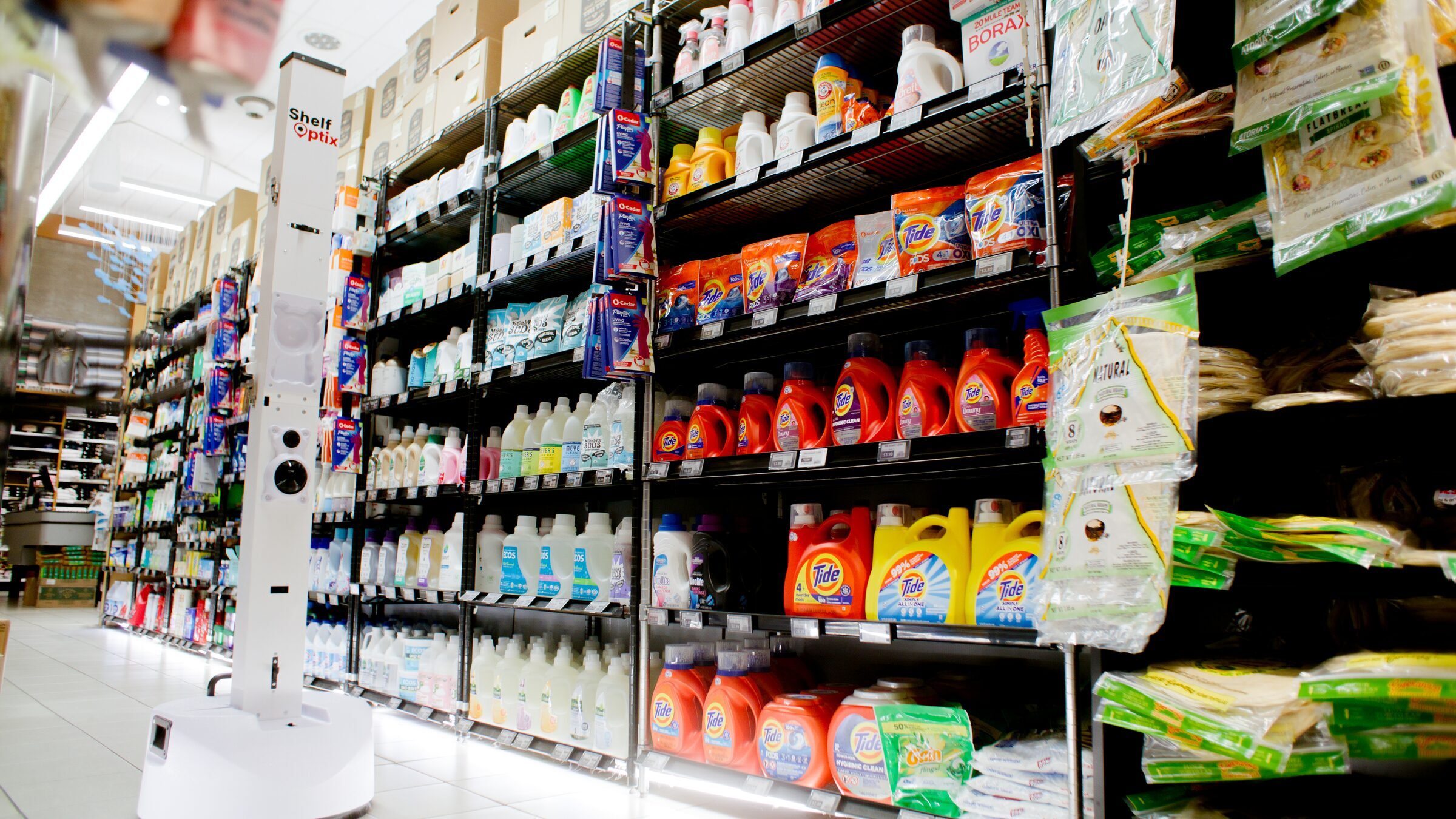
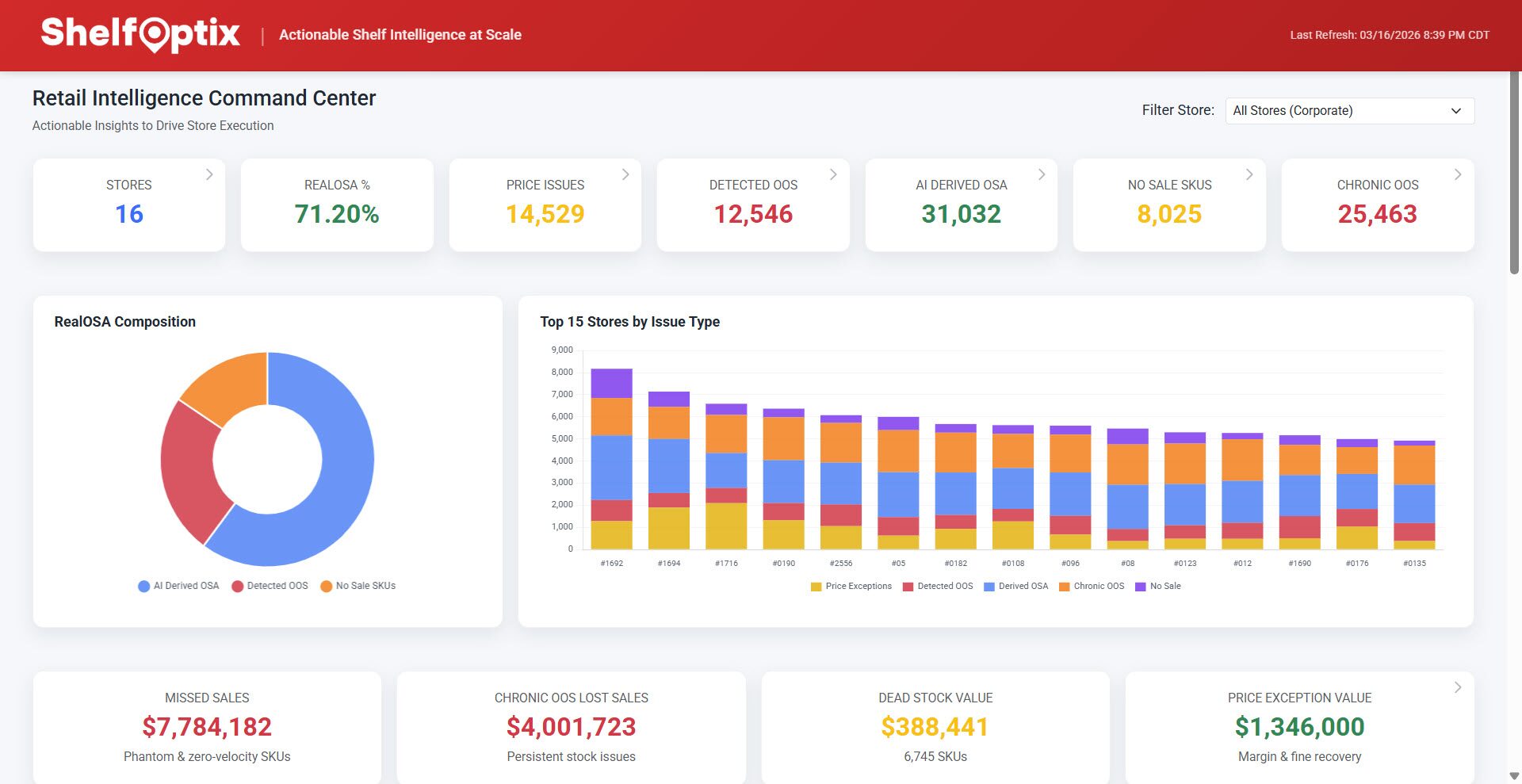
ShelfOptix captures consistent, high-resolution shelf data at scale through a fully managed, portable, human-led, robot-powered scanning approach. That data flows into our shelf intelligence platform, where it is analyzed to identify execution gaps such as missing facings, incorrect product placement, price tag discrepancies, out-of-stocks, and phantom inventory.
But data alone isn’t enough. What makes ShelfOptix different is the execution layer. With 15,000 Driveline Retail associates ready to act on every insight, ShelfOptix doesn’t just flag problems — it helps fix them. Ground-truth shelf visibility, backed by a managed service designed to close the gap between what headquarters planned and what shoppers actually find on the shelf.
For retailers and CPG brands that are serious about closing the planogram gap, ShelfOptix delivers the shelf intelligence needed to take action — at retail scale, without the operational burden.
Statistics in this article are sourced from the IHL Services Shelf Intelligence Report: Rebuilding Retail Relationships Through Automation, published in partnership with Brain Corp. Download the full report →
Stop relying on manual audits and incomplete data. ShelfOptix delivers ground-truth shelf visibility at retail scale — fully managed, continuously updated, and backed by 15,000 associates ready to act.
Thanks for reaching out. A member of the ShelfOptix™ team will be in touch with you right away.