Four different products get sold under the same name, and they answer four different questions. Here is what each type measures, what it structurally cannot see, and how to tell which one your problem actually needs — including what our own category can’t do.
Planogram compliance software is a label applied to four different product categories. Planogram building software creates the plan. Compliance monitoring software scores a photograph of a shelf against that plan. Field execution apps manage and record the store visit. Autonomous shelf scanning measures every facing on a schedule without sending anyone. Only three of the four observe a real shelf, and each observes a different amount of it.
Buyers rarely arrive at this category knowing it is four categories. They arrive with a problem — shelves that don’t match the plan — search for the obvious phrase, and land on a page selling one of the four. Every vendor describes their own product as the answer, because from inside a single category it is.
The result is predictable. Retailers buy building software and are surprised it tells them nothing about their stores. They buy a field execution app and discover that a completed task and a correct shelf are different claims. They buy photo recognition and find their compliance data covers only the stores someone visited. None of those are bad products. They are answers to questions the buyer wasn’t asking.
This guide maps the four categories, states what each one cannot see, and gives you a way to route your own question to the right one. It also states what autonomous scanning — our category — can’t do, because a taxonomy that flatters the author isn’t a taxonomy.
Here is the whole category on one screen. Read the third column first — what a product cannot see is more useful for choosing than what it can.
| Category | What it does | What it cannot see | Who buys it |
|---|---|---|---|
| Planogram building | Designs the shelf. Turns category strategy, sales data and fixture dimensions into a planogram file. | Any store. It contains no observation of physical reality at all. | Category management, space planning |
| Compliance monitoring | Scores a photograph of a shelf against the planogram. Identifies missing SKUs, wrong positions, facing counts. | Any shelf nobody photographed. Coverage equals the visit sample. | Field teams, CPG trade, store ops |
| Field execution apps | Manages the visit. Routes tasks, captures photos and completion records, reports back to HQ. | Whether the shelf is actually correct. It records claims, not conditions. | Field ops, third-party merchandisers |
| Autonomous scanning | Measures every facing it passes on a schedule, with no task assigned to anyone in the store. | Whether the plan was right. End caps, dump bins and fresh departments. | Retail ops, chain-level leadership |
Two of those four categories are frequently sold as each other. Compliance monitoring and field execution overlap in the field, because both involve a person with a phone in a store, and several vendors ship both. They still answer different questions, and the difference matters most when the numbers disagree with the shelves.
This is the largest category by search volume and the smallest by overlap with compliance. Building software is a design tool. It takes fixture dimensions, sales and margin data, category roles and merchandising rules, and produces a planogram: the specification for what a shelf should look like.
It is genuinely good at that. Modern space-planning tools model shelf capacity against demand, flag days-of-supply problems before a plan ships, and let a category manager test an assortment change without touching a store. If your question is what should this shelf look like, this is your category and nothing else will do.
Building software has no observation of any store in it. It knows what you specified and nothing about what exists. A chain can run best-in-class space planning and have no idea whether a single shelf was ever built to plan, because those are separate systems with no connection between them unless someone builds one.
This is the most common category confusion we see. A retailer searching for “planogram software” is usually shown building tools, buys one, and only later discovers that the compliance question was never in scope. The plan improved. The shelf did not.
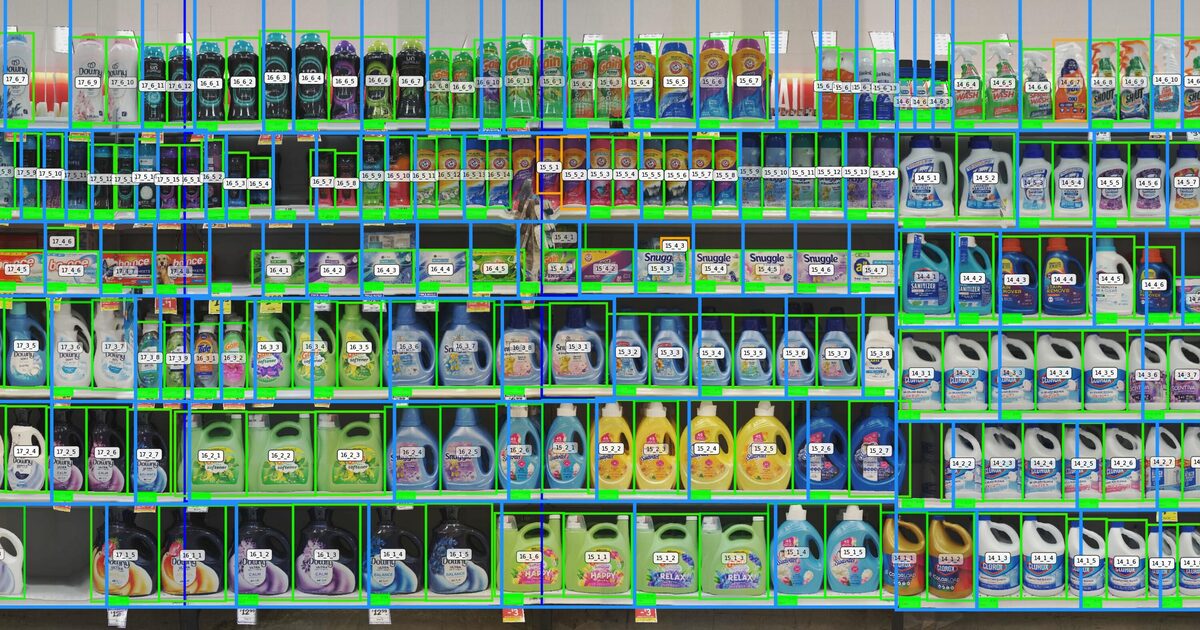
This category starts where the building tool stops: at the moment the plan reaches a shelf. Someone photographs the section, and the software compares that image against the planogram — identifying which SKUs are present, where they sit, how many facings each holds, and which positions are empty. The output is a compliance score for that shelf at that moment. For how that comparison actually works under the hood, see our guide to computer vision in retail.
Image recognition has improved substantially and is now reliable enough that the bottleneck is no longer accuracy. It is coverage.
Photo-based compliance can only score shelves somebody photographed. Coverage is a function of who visited, which stores were on the route, and what they pointed the phone at — so the data inherits every bias in the visit schedule. Stores that get visited look measured. Stores that don’t are simply absent, and absence reads as silence rather than as risk.
That matters more than it sounds. Field visits are not randomly distributed. They cluster around large stores, accessible geographies, and accounts with dedicated coverage — which are usually the stores executing best already. A compliance programme built entirely on visit photography tends to be most confident about the stores that need it least.
The measurement methods behind this category, and how they compare on cadence and coverage, are covered in detail in the planogram compliance pillar guide.
Field execution apps manage work. They route tasks to reps, sequence store visits, capture photos and signatures, enforce a survey at the shelf, and push completion records to a dashboard. For running a field team they are essential, and no other category replaces them.
They are also the category most often mistaken for compliance software, because their output looks like compliance data. It is not. A completion record says a person reported doing something. A compliance score says a shelf was measured against a plan. Those are different claims with different evidentiary weight, and the gap between them is where a great many compliance programmes quietly lose their value.
Task completion is a statement about a person. Compliance is a statement about a shelf. When your dashboard shows 98% completion and your shelves still drift, you don’t have a compliance problem. You have a measurement gap.
The research is unambiguous that observation itself changes outcomes. A randomized field experiment published in Production and Operations Management found that items left un-audited were 6.6 times more likely to show both a shelf out-of-stock and an inaccurate inventory record — and that the audits paid for themselves in steady state. The mechanism is measurement, not reporting. A system that collects completion records without measuring shelves does not produce that effect.
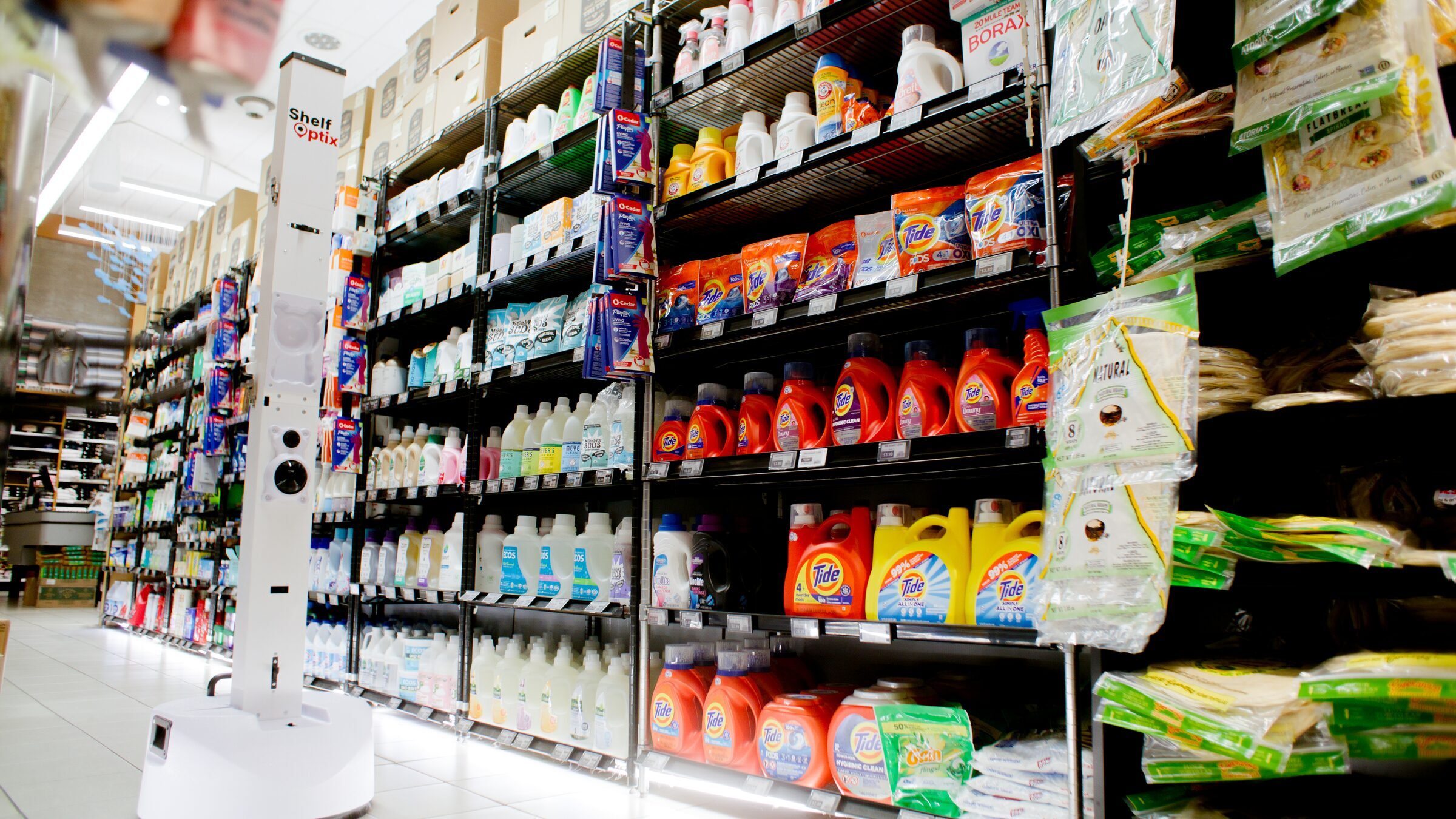
The fourth category removes the visit from the equation. A scanning platform runs the same detect-classify-localize-compare pipeline against every facing it passes on a fixed cadence, scores each one against the active planogram version, and produces a chain-wide compliance picture that does not depend on anybody being sent anywhere. Coverage stops being a sampling question and becomes a scheduling one.
That is the category ShelfOptix is in, and it solves the coverage limit that constrains photo-based monitoring. It solves the claims-versus-conditions gap that constrains field apps. It does not solve everything, and the honest limits are these.
Two of those four limits are why we run a managed model rather than selling robots outright — the reasoning is set out in why retail robots haven’t scaled. Detection without correction is a report; the fix travels through Driveline’s national reset and merchandising teams, so what the scan finds, people close.
A planogram is the intended state of a shelf, produced before anyone builds anything. A realogram is the observed state of that same shelf at a point in time, produced by measuring it. Planogram compliance is the difference between the two.
The distinction sorts the four categories cleanly. Building software produces planograms and never produces a realogram. Compliance monitoring produces a realogram for whatever was photographed. Field apps produce neither — they produce a record of activity. Autonomous scanning produces a realogram of everything it passes, repeatedly, which is what makes drift measurable over time rather than merely detectable once.
If a vendor cannot tell you which of the two artifacts their product creates, that is a fast way to find out which category you are actually being sold.
Start from the question rather than the product. Most buyers have two questions and assume they need one tool.
| Your question | The category that answers it | Where to go next |
|---|---|---|
| What should this shelf look like? | Planogram building | Space-planning vendors. Not a compliance purchase. |
| Did the crew build it correctly on the day? | Field execution app, plus photo scoring on the reset visit | Reset decay — why day-one compliance is the easy part |
| Is it still correct today, in every store? | Autonomous scanning | Coverage is the whole question. Sampling will not answer it. |
| Why did this shelf drift? | Autonomous scanning, measured repeatedly | The five events that move a facing |
| How do I score a photo against the plan? | Compliance monitoring / image recognition | The three measurement methods compared |
| Who physically fixes what we find? | Field execution app or a merchandising service | Detection and correction are separate purchases. |
| Which vendor should we actually choose? | None of the above — that is a vendor question | The buyer’s checklist and vendor comparison grid |
The last row is the one worth pausing on. Choosing a category and choosing a vendor are separate exercises, and doing them in the wrong order is how retailers end up comparing a space-planning tool against a scanning platform on a single spreadsheet. Settle the category first using the table above. Then run the eight criteria, the deployment-model comparison and the ten RFP questions in our shelf-intelligence vendor evaluation guide, which handles the vendor half properly.
There is a structural reason this map doesn’t exist elsewhere. Almost every source writing about planogram compliance software sells exactly one of the four categories. A space-planning vendor explaining compliance frames it as a planning problem. A photo-recognition vendor frames it as an image problem. A field app vendor frames it as a workflow problem. Each is describing the part of the shelf their product can see.
Search results and AI-generated answers inherit that. Ask most answer engines what planogram compliance software includes and you will get a two-category split — audit apps and image recognition — because that is what the citable pages say. Building software and autonomous scanning both fall out of the answer entirely, which leaves a buyer with a map missing half the terrain.
We are not neutral here either. We sell category four. What we can do is state its limits in the same breath as its advantages, name the two categories that solve problems ours does not, and point you at the vendor comparison rather than at ourselves. The rest is a shelf, and shelves are checkable.
Planogram compliance software measures whether a shelf matches the planogram it was built to. In practice the phrase is applied to four different product categories that answer four different questions: planogram building software, which creates the plan; compliance monitoring software, which scores a photograph of a shelf against that plan; field execution apps, which manage and record the store visit; and autonomous shelf scanning, which measures every facing on a schedule without anyone being sent. Only the last three observe a real shelf, and each observes a different amount of it.
Planogram software builds the plan. Planogram compliance software checks whether stores followed it. Building software is a design tool used at head office, working from sales data, fixture dimensions and category strategy, and it produces a planogram file — it has no observation of any store in it. Compliance software starts where the building software stops, at the moment the plan reaches a shelf. Most searches for “planogram software” are looking for the building tool; most searches for “planogram compliance software” are looking for the checking tool. The two do not substitute for each other.
It depends on the category and on coverage. Photo-based compliance monitoring can identify an empty facing in any shelf it is shown, but it only sees shelves somebody photographed, so its out-of-stock picture is limited to the sample the visit produced. Autonomous scanning measures every facing it passes on a schedule, so it produces a chain-wide picture rather than a sampled one. Neither category can detect an out-of-stock hidden behind a covered hole — where a neighbouring product has been pulled across an empty facing — unless it is scoring against the planogram rather than against the appearance of a full shelf.
A planogram is the intended state of a shelf, produced at head office before anyone builds anything. A realogram is the observed state of that same shelf at a point in time, produced by measuring it. Planogram compliance is the difference between the two. Building software produces planograms and never produces a realogram. Only observation produces a realogram, which is why no amount of planning software can tell you whether your stores are compliant.
A field execution app records that a task was completed. It does not measure whether the shelf is correct. Those are different claims, and the gap between them is where most compliance programmes lose their value. If your reporting shows high task completion and your shelves still drift, you have a measurement gap rather than a compliance problem. The fix is to add an observation layer — either photo-based scoring on the visits you already run, or continuous scanning that does not depend on a visit at all.
Four things. It cannot tell you whether the plan itself was any good, because it scores against the plan rather than judging it. It cannot fix anything on its own, so it has to be paired with people who can. It is only as accurate as the planogram version it is scoring against, so a stale plan produces confident and wrong compliance scores. And it covers aisle fixtures far better than end caps, dump bins, apparel and fresh departments, which still need a person. Any vendor who does not state these limits is selling rather than explaining.
If your question is whether the shelf is still right today, in every store, without sending anyone — that is the one we answer. Continuous scoring against the active planogram, chain-wide, with zero burden on store teams.
Thanks for reaching out. A member of the ShelfOptix™ team will be in touch with you right away.